
Exercise bikes and treadmills are among the more difficult items you're likely to move. Due to their size, shape, and weight, they can be a real hazard to adjacent items if they're not properly restrained — and their moving parts and heavy, often off-center components (like a flywheel) add extra risk if the equipment isn't secured for transit.
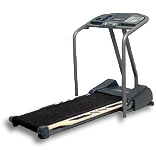
Lock or immobilize moving parts using the equipment's own fold-lock mechanism where it has one — check your manual first. Once folded/locked, secure the machine to the truck or trailer wall with rated straps at solid attachment points, the same way you would any other heavy item. Rope or bungee cords are fine for keeping loose parts (like a fold-down arm) from swinging, but they're not a substitute for real strapping when it comes to keeping the whole machine from tipping or sliding.
Some machines can be partly disassembled. Exercise bikes may have removable pedals (thread direction can differ on each side — see our bicycles page) and adjustable or removable handlebars.
Consult your owner's manual for shipping advice. There may be model-specific precautions, especially for anything with a battery or electronic display.
Helpful Hints
- Electronic displays are vulnerable on many exercise machines. The frame may be sturdy metal, but displays are often less durable plastic — pad them specifically.
- The weight of the flywheel in many machines is substantial and often concentrated at one end. Be careful when lifting, and get a partner to help — this is not a one-person item.
- Route large or unusually shaped equipment to qualified movers if you're not confident you can restrain it safely — there's no shame in paying for this one item if it's beyond what your equipment and helpers can handle.