
Washers and dryers tend to be located in basements or small utility rooms. This alone makes them a little more challenging and intimidating for the average mover. A utility dolly is highly recommended for these items. Take your time and get some help to avoid injury and damage to either your belongings or your home.
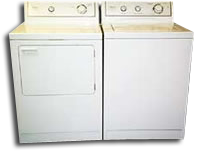
Washers have a lot of connections including hot and cold water, a drain pipe, and a power cord. Exercise caution when removing the water lines from the back of the washer. The connections on many washers are plastic and prone to damage. It might seem common sense, but it is not uncommon to forget to turn off the water.
Store connectors and hoses inside the machine itself. Consider placing them inside one or two paper bags to help avoid scratching up the interior.
Check whether your washer needs shipping bolts or a transit brace installed before it moves. Many washers use the drum's suspension during normal operation, and that suspension can be damaged by the motion of transport without the manufacturer's shipping hardware in place. Get the correct bolts/brace for your model in advance — a local appliance dealer or the manufacturer can often help if you no longer have the originals.
Refer to your user's manual for any model-specific concerns. Some washers may have procedures for draining excess water that is trapped within them. This might be a larger concern if you expect them to be subjected to freezing temperatures along the way. Other washers may recommend that the tub be secured to avoid damage in transit.
Connectors on the back of washers and dryers are easily damaged. Use a folded moving blanket or furniture pad as a buffer between the machine and the truck wall or neighboring items, and secure the appliance with rated straps so it can't shift into that buffer — padding alone won't stop a heavy appliance from moving.
Helpful Hints
- If your dryer is gas, arrange for qualified disconnection and reconnection — don't disconnect or reconnect a gas line yourself unless you're qualified to do it safely. Electric dryers are more straightforward, but check the specific plug/outlet type at your new home before assuming it'll match.
- Consider placing the washer and dryer side-by-side in the truck. They are designed to fit together nicely. Several layers of blanket placed between them will help avoid damage from rubbing.
- Appliances often have adjustable feet on them. This can be a problem when trying to scoot them into place in a truck. Those little feet, when extended, can get stuck in grooves on the floor of the truck. Exercise care to avoid damaging them.
- Avoid loading extreme weight onto washers and dryers. They may appear very sturdy, but they can typically be damaged by excess weight. Top-loading washers are particularly prone to this.
- Padding is essential for washers and dryers. They typically have a smooth, shiny finish that will highlight any dings or scratches.